|
|
|
|
|
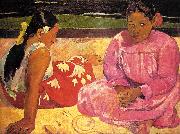
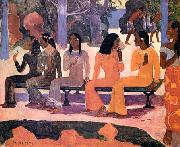
Women of Tahiti
Painting ID:: 1330
|
Paul Gauguin
Women of Tahiti
1891 69 x 91 cm
Mus??e d'Orsay, Paris
|
| |
|
|
|
|
|
|
|
|
|
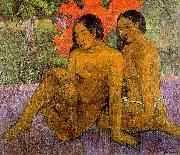
And the Gold of Their Bodies
Painting ID:: 1331
|
Paul Gauguin
And the Gold of Their Bodies
1901
Musee d'Orsay, Paris
|
| |
|
|
|
|
|
|
|
|
|
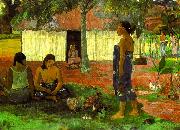
Why Are You Angry
Painting ID:: 1332
|
Paul Gauguin
Why Are You Angry
1896
Art Institute of Chicago
|
| |
|
|
|
|
|
|
|
|
|
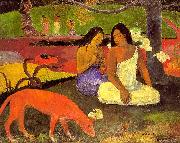
Making Merry8
Painting ID:: 1333
|
Paul Gauguin
Making Merry8
1892
|
| |
|
|
|
|
|
|
|
|
|
Ta Matete
Painting ID:: 1334
|
Paul Gauguin
Ta Matete
1892
|
| |
|
|
|
|
|
|
|
|
| Prev Artist Next Artist
|
|
|
Paul Gauguin
|
|
French
1848-1903
Paul Gauguin Art Locations
(born June 7, 1848, Paris, France ?? died May 8, 1903, Atuona, Hiva Oa, Marquesas Islands, French Polynesia) French painter, sculptor, and printmaker. He spent his childhood in Lima (his mother was a Peruvian Creole). From c. 1872 to 1883 he was a successful stockbroker in Paris. He met Camille Pissarro about 1875, and he exhibited several times with the Impressionists. Disillusioned with bourgeois materialism, in 1886 he moved to Pont-Aven, Brittany, where he became the central figure of a group of artists known as the Pont-Aven school. Gauguin coined the term Synthetism to describe his style during this period, referring to the synthesis of his paintings formal elements with the idea or emotion they conveyed. Late in October 1888 Gauguin traveled to Arles, in the south of France, to stay with Vincent van Gogh. The style of the two men work from this period has been classified as Post-Impressionist because it shows an individual, personal development of Impressionism use of colour, brushstroke, and nontraditional subject matter. Increasingly focused on rejecting the materialism of contemporary culture in favour of a more spiritual, unfettered lifestyle, in 1891 he moved to Tahiti. His works became open protests against materialism. He was an influential innovator; Fauvism owed much to his use of colour, and he inspired Pablo Picasso and the development of Cubism.
|
|
Related Artists::.
| Aleksander Kotsis | Charles Rollo Peters | Jane Sutherland | |
|