|
|
|
|
|
Oil On
Canvas, Real Flavor of Old Masters
|
|

|
ARTWORKS
INDEX
A B C D E F G H I J K L M N O P Q R S T U V W X Y Z |
ARTISTS
INDEX
A B C D E F G H I J K L M N O P Q R S T U V W X Y Z |
|
|
| | |
|
|
|
|
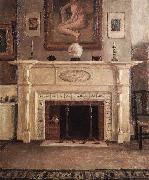 |
Hamilton Easter Field -- Click Here
|
|
(1873-1922) was an important American artist, teacher, author, critic, collector and patron of the arts |
|
 |
HALS, Frans -- Click Here
|
|
Dutch painter (b. 1580, Antwerpen, d. 1666, Haarlem). |
|
 |
GUARDI, Francesco -- Click Here
|
|
Italian Rococo Era Painter, 1712-ca.1793
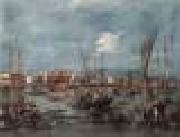
The records of his parish in Venice show that Francesco Guardi was baptized on Oct. 5, 1712. His father, Domenico, who died when Francesco was 4, had a workshop. Francesco and his elder brother, Gian Antonio, worked in a small studio, carrying out such orders as they could get for almost anything the client wanted:mythological pictures, genre, flower pieces, battle scenes, altarpieces, and even, on rare occasions, frescoes. They did not hesitate to copy compositions by other artists, but what they borrowed they always transformed into something more capricious, less stable, more fragmentary in the refraction of light. Francesco did not emerge as an independent personality until 1760, when his brother died. Then, 48 years old, he married, established his own studio, and devoted himself chiefly to painting views of Venice. For the most part he worked in obscurity, ignored by his contemporaries. He was not even admitted to the Venetian Academy until he was 72 years old. Guardi and Canaletto have always been compared to one another because the buildings they chose to paint were often the same. But the way each artist painted them is very different. Canaletto's world is constructed out of line. It provides solid, carefully drawn, three-dimensional objects that exist within logically constructed three-dimensional space. Guardi's world is constructed out of color and light. The objects in it become weightless in the light's shimmer and dissolve in a welter of brushstrokes; the space, like the forms in space, is suggested rather than described. Canaletto belonged essentially to the Renaissance tradition that began with Giotto and, as it grew progressively tighter and more controlled, pointed the way to neoclassicism. Guardi belonged to the new baroque tradition that grew out of the late style of Titian and, as it became progressively looser and freer, pointed the way toward impressionism. Such differences appear even in Guardi's early view paintings, where he was obviously trying to copy Canaletto, such as the Basin of San Marco. The famous buildings are there, but they are far in the background, insubstantial, seeming to float. In front is a fleet of fishing boats, their curving spars seeming to dance across the surface of the canvas. What is important for Guardi is not perspective but the changing clouds and the way the light falls on the lagoon. Guardi became increasingly fascinated by the water that surrounds Venice. In late works, such as the famous Lagoon with Gondola, buildings and people have been stripped away until there is nothing but the suggestion of a thin line of distant wharfs, a few strokes to indicate one man on a gondola, a long unbroken stretch of still water, and a cloudless sky. Guardi also painted the festivals that so delighted visitors to the city, such as the Marriage of Venice to the Sea. This was a symbolic ceremony in which the doge, in the great gilded galley of the head of state, surrounded by a thousand gondolas, appeared before all Venice, in Goethe's image, "raised up like the Host in a monstrance." Of all Guardi's paintings the most evocative are his caprices, the landscapes born out of his imagination though suggested by the ruined buildings on the lonely islands of the Venetian lagoon. A gentle melancholy clings to such scenes.
|
|
 |
GRANACCI, Francesco -- Click Here
|
|
Italian High Renaissance Painter, ca.1469-1543
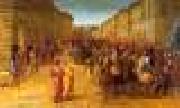
was an Italian painter of the Renaissance. Born at Villamagna di Volterra, he trained in Florence in the studio of Domenico Ghirlandaio, and was employed painting frescoes for San Marco on commission of Lorenzo de'Medici. He is featured in Giorgio Vasari's Vite. His early works, such as the Enthroned Madonna between Saint Michael and John the Baptist (Staatliche Museen, Berlin), Adoration of the Child (Honolulu Academy of Arts) and four histories of Saint John the Baptist, were influenced by the style of Filippino Lippi. In 1508, Granacci went to Rome, where he and other artists helped his lifelong friend Michelangelo to transfer cartoons to the Sistine chapel ceiling. Returning to Florence, Granacci painted a Madonna with Child with Saints Francesco and Jerome for the Augustinian convent of San Gallo (now in the Gallery of the Academy), a Madonna della Cintola for the Company of San Benedetto Bigi, and in 1515 he participated in creating the decorations to celebrate the visit to Florence of Pope Leo X. In 1519, he painted a Madonna with Child and Saint John. Works of the years 1520-1525 betray a direct influence of Fra Bartolomeo, including a Madonna in throne between Saints Sebastiano and Francesco for Castelfiorentino and a Sacred Conversation for Montemurlo. An altarpiece of the Assumption is influenced by Pietro Perugino. |
|
 |
Govert flinck -- Click Here
|
|
Dutch Baroque Era Painter, 1615-1660
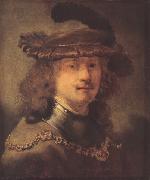
was a Dutch painter of the Dutch Golden Age. Born at Cleves, he was apprenticed by his father to a silk mercer, but having secretly acquired a passion for drawing, was sent to Leeuwarden, where he boarded in the house of Lambert Jacobszon, a Mennonite, better known as an itinerant preacher than as a painter. Here Flinck was joined by Jacob Backer, and the companionship of a youth determined like himself to be an artist only confirmed his passion for painting. Amongst the neighbours of Jacobszon at Leeuwarden were the sons and relations of Rombertus van Uylenburgh, whose daughter Saske married Rembrandt in 1634. Other members of the same family lived at Amsterdam, cultivating the arts either professionally or as amateurs. The pupils of Lambert probably gained some knowledge of Rembrandt by intercourse with the Ulenburgs. Certainly Joachim von Sandrart, who visited Holland in 1637, found Flinck acknowledged as one of Rembrandt's best pupils, and living habitually in the house of the dealer Hendrik Uylenburg at Amsterdam. For many years Flinck laboured on the lines of Rembrandt, following that master's style in all the works which he executed between 1636 and 1648. With aspirations as a history painter, however, he looked to the swelling forms and grand action of Peter Paul Rubens, which led to many commissions for official and diplomatic painting. Flinck's relations with Cleves became in time very important. He was introduced to the court of the Great Elector, Friedrich Wilhelm I of Brandenburg, who married in 1646 Louisa of Orange. He obtained the patronage of John Maurice of Nassau, who was made stadtholder of Cleves in 1649. In 1652 a citizen of Amsterdam, Flinck married in 1656 an heiress, daughter of Ver Hoeven, a director of the Dutch East India Company. |
|
 |
Govaert Flinck -- Click Here
|
|
1615-1660
Dutch
Govaert Flinck Locations
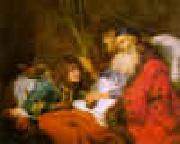
Born at Cleves, he was apprenticed by his father to a silk mercer, but having secretly acquired a passion for drawing, was sent to Leeuwarden, where he boarded in the house of Lambert Jacobszon, a Mennonite, better known as an itinerant preacher than as a painter.
Here Flinck was joined by Jacob Backer, and the companionship of a youth determined like himself to be an artist only confirmed his passion for painting. Amongst the neighbours of Jacobszon at Leeuwarden were the sons and relations of Rombertus van Uylenburgh, whose daughter Saske married Rembrandt in 1634. Other members of the same family lived at Amsterdam, cultivating the arts either professionally or as amateurs. The pupils of Lambert probably gained some knowledge of Rembrandt by intercourse with the Ulenburgs. Certainly Joachim von Sandrart, who visited Holland in 1637, found Flinck acknowledged as one of Rembrandt best pupils, and living habitually in the house of the dealer Hendrik Uylenburg at Amsterdam.
For many years Flinck laboured on the lines of Rembrandt, following that master style in all the works which he executed between 1636 and 1648. With aspirations as a history painter, however, he looked to the swelling forms and grand action of Peter Paul Rubens, which led to many commissions for official and diplomatic painting. Flinck relations with Cleves became in time very important. He was introduced to the court of the Great Elector, Friedrich Wilhelm I of Brandenburg, who married in 1646 Louisa of Orange. He obtained the patronage of John Maurice of Nassau, who was made stadtholder of Cleves in 1649. In 1652 a citizen of Amsterdam, Flinck married in 1656 an heiress, daughter of Ver Hoeven, a director of the Dutch East India Company. He was already well-known even then in the patrician circles over which the burgomasters De Graef and the Echevin Six presided; he was on terms of intimacy with the poet Vondel and the treasurer Uitenbogaard. In his house, adorned with antique casts, costumes, and a noble collection of prints, he often received the stadtholder John Maurice, whose portrait is still preserved in the work of the learned Barleius. |
|
 |
Girolamo Forabosco -- Click Here
|
|
1604-1679
Italian
Girolamo Forabosco Location
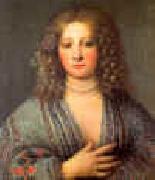
Italian painter. He was active in Padua and Venice, where he was enrolled in the Fraglia dei Pittori between 1634 and 1639 and paid taxes from 1640 to 1644. His early work, such as the portrait of the so-called Menichina (1624; Rome, Pal. Barberini), was influenced by that of Alessandro Varotari (Padovanino), who had revived the style of Titian. He also adopted compositional and formal schemes from Tiberio Tinelli, as in the Portrait of a Woman. The large canvas of the Miraculous Rescue (1646; Malamocco, S Maria Assunta), commissioned by Giovanni Ventura as an ex-voto for his escape from a shipwreck, shows Forabosco, unconstrained by the narrative and devotional character premises of the undertaking, creating a tender portrait group, distinguished by its spontaneity. The most striking quality of his work is its combination of physiognomic exactitude with free, fluid brushwork. |
|
 |
GIRARDON, Francois -- Click Here
|
|
French Baroque Era Sculptor, 1628-1715
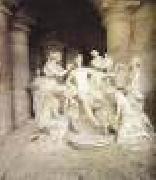
François Girardon was born at Troyes on March 17, 1628. He studied in Rome for an undetermined period of time between 1645 and 1650. He then studied at the Royal Academy in Paris and was admitted to the academy as a member in 1657. Much of Girardon's most important work was executed for King Louis XIV and consisted of major commissions for the palace and gardens of Versailles. One of Girardon's most famous productions is Apollo and the Nymphs of Thetis in Versailles (1666-1672), originally designed for a grotto there. This elaborate project of seven separate marble statues depicts the god Apollo surrounded by nymphs, and it exemplifies with exceptional clarity the French interpretation of the baroque style in sculpture, an interpretation that rejected the fluid, dramatic, and emotional Italian baroque in favor of a cooler, more sober approach based upon the sculpture of antiquity. The Apollo group is filled with references to Hellenistic and Roman sculpture, and while Girardon was working on the commission he made a second trip to Rome for inspiration from antique sources. The ancient world, however, had never attempted to assemble several large pieces of free-standing sculpture into one unified composition, and in solving this problem Girardon had recourse to the paintings of Nicolas Poussin, the great French baroque classicist. The classicism of the Apollo group conformed fully to the official style of the French Academy and the personal taste of Louis XIV, but the composition has many baroque elements. The vigor and variety in the movement of the figures, the rich textural contrasts, the grand scale of the project, and the dramatic use of space are all stylistic qualities that firmly link the work to the international baroque style. One of Girardon's most important works is the tomb of Cardinal Richelieu in the church of the Sorbonne, Paris (1675-1677). This monument shows the dying prelate in a semireclining position, his vestments falling in broad curves that are echoed in the draperies of the allegorical figures at the head and foot of the tomb. As originally placed in the church, the monument was freestanding so that the spectator was compelled to enter into the action of the work - a typical baroque compositional device. Girardon's most significant late work was a majestic bronze equestrian statue of Louis XIV (1683-1692) executed for the Place Vendôme in Paris and based upon the famous Roman equestrian monument of the emperor Marcus Aurelius. |
|
 |
Giovanni Fattori -- Click Here
|
|
Italian Realist Painter , 1825-1908
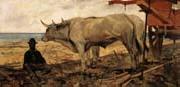
was an Italian artist, one of the leaders of the group known as the Macchiaioli. He was initially a painter of historical themes and military subjects. In his middle years, inspired by the Barbizon school, he became one of the leading Italian plein-airists, painting landscapes, rural scenes, and scenes of military life. After 1884, he devoted much energy to etching. |
|
 |
Giovanni Domenico Ferretti -- Click Here
|
|
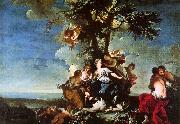
1692-1768 Italian Giovanni Domenico Ferretti Location Italian painter. He was the son of the goldsmith Antonio di Giovanni da Imola and Margherita di Domenico Gori. His mother family, which included her brother, the antiquarian ANTONIO FRANCESCO GORI, was extremely influential in Florence and proved very important for Ferretti. In the first years of his life he lived in Imola, where he was sent to study (1708) with the local painter Francesco Chiusuri. After the family moved to Florence, Ferretti was taught there by Tommaso Redi and Sebastiano Galeotti. Later he spent five years in Bologna, an important centre for the practice and teaching of academic painting, where, in the workshop of Felice Torelli, his work acquired its characteristic style. |
|
 |
Giovanni di Francesco -- Click Here
|
|
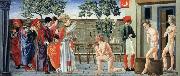
Italian Early Renaissance Painter, 1412-1459 |
|
 |
Giovanni Antonio Fumiani -- Click Here
|
|
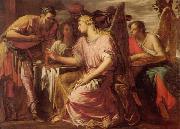
(1645-1710) was an Italian painter of the Baroque period.
Born in Venice in 1645, he trained in Bologna under Domenico degli Ambrogi, a specialist in quadratura, but by 1668 he was back in Venice, where he painted a Virgin and Saints in San Benedetto. He was influenced by Ludovico Carracci and Alessandro Tiarini, and soon also became interested in the work of Paolo Veronese, so that he started to use elaborate architectural settings and brighter colours. He painted a Virgin Appearing to Pius V (1674; Vicenza, S Lorenzo), whose monumentality foreshadows Tiepolo, whereas mosaics in San Marco, created in 1677 from Fumianies cartoons, are closer to the idiosyncratic art of Pietro della Vecchia. He contributed to the decoration of San Rocco (1675, 1676, 1678), where he painted a large canvas of the Charity of St Roch on the ceiling of the nave, In his smaller paintings, however, such as the modelli (Florence, Uffizi) painted for the Ferdinand de Medici, Grand Prince of Tuscany, for whom he worked for a long time, with Niccole Cassana acting as intermediary, Fumiani revealed a lively decorative sense and a taste for animated, sensual subjects that produced works of great quality. His last work is the large lunette depicting Frederick III visiting St Zacharyes Convent in the Company of the Doge (Venice, San Zaccaria).
The decoration of San Pantalon with scenes from the Life of St Pantaleon (1680-1704) utilized canvases to cover a large ceiling (25x50 m), an ambitious undertaking, both in its scale and in the unity of the magniloquent images, that parallels Andrea Pozzoes decoration at the church of Sant'Ignazio in Rome. Fumiani was responsible for painting what is claimed to the largest painting on canvas in the world and covers the whole of the ceiling of the church Chiesa di San Pantaleone Martire, known as San Pantalon, in Venice. The painting depicts The Martyrdom and Apotheosis of St Pantalon, which he painted from 1680 until 1704. He putatively died from a fall from a scaffold, although some sources date his death to six years after he stopped work on the canvas
|
|
 |
Giacomo Francesco Cipper -- Click Here
|
|
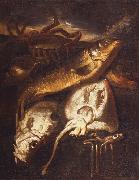
(Feldkirch, 1664 - Milan, 1736) was a German painter active in Milan from 1696 to 1736.
Of German origin, he was active in Milan in the first half of the 18th century. Fertile painter of scenes of kind of formulation caravaggesca, his first attributed work is dated 1700; he operated in Lombardia and in Veneto ( Hunters and greengrocers , Modena, Gallery Campori; Farmers' family , Venice, Galleries of the academy). Subsequently the artist, perhaps under the influence of the Cerruti (some of whose works were once attributed to Cipper), to the scrupulous surrender of the detail it replaced a less illustrative vision, more sensitive to the games of light.
His last known work is Self-portrait (1736, Hampton Court).
|
|
 |
Giacomo Favretto -- Click Here
|
|
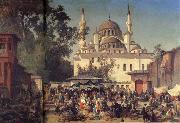
Abbandonata la bottega di falegname paterna, frequenti dal 1864 l'Accademia di Belle Arti di Venezia, dove le lezioni impartitegli misero in luce le qualita innate di pittore, evidenziate in una delle sue opere maggiori La lezione di anatomia (1873).
Nel 1878 compi un viaggio a Parigi insieme a Guglielmo Ciardi. Il viaggio fu determinante per l'evoluzione della sua arte, come tecnica e come soggetti (non solo scene di intimita familiare ma anche soggetti in costume settecentesco). Riscosse un ottimo successo, si fece conoscere a livello internazionale e assimilo una certa tendenza al manierismo.
Del 1880 e l'opera Vandalismo, premiata a Brera, dove fu esposta ed e attualmente conservata. In queste opere l'artista si converti verso un'animazione realistica, un uso della coloristica controllato, un grande dispiego inventivo e una delicatezza tonale.
Negli ultimi anni le opere del Favretto assunsero una sempre crescente luminosita ed una struttura sempre piu naturalistica.
Mori nel 1887, durante l'Esposizione nazionale artistica tenutasi nella citta lagunare, nella quale l'artista esponeva Il Liston. |
|
 |
Germain-Fabius Brest -- Click Here
|
|
French, 1823-1900 |
|
 |
Georges de Feure -- Click Here
|
|
1868-1928
French designer and painter. Son of a Dutch architect and a Belgian mother, he started out as an actor, costumier and then interior decorator in Paris. In 1894 at the Galerie des Artistes Modernes he exhibited watercolours and paintings of a moderate Symbolist style, typically depicting women in a manner reminiscent of Aubrey Beardsley work. Capturing the essence of the feminine spirit became his trademark. With Eugene Gaillard and Edouard Colonna he was selected by Siegfried Bing, founder of the Galeries de l Art Nouveau, to design rooms for his Pavilion Bing at the Exposition Universelle, Paris (1900). De Feure carpets, glassware and furniture designs for the boudoir and toilette were based on the theme of woman, emphasizing delicate lines and elegant sensuality. He later left Bing gallery and, as an independent designer, created vide-poche furniture, which contained hidden marquetry compartments. This furniture suggested notions of secrecy and coquetry, themes that de Feure pursued throughout his career. |
|
 |
George French Angas -- Click Here
|
|
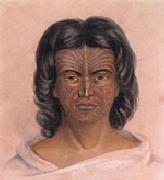
(1844-1932), was a portrait painter.
was an English explorer, naturalist and painter. He was the eldest son of George Fife Angas, prominent in the establishment of the new colony of South Australia. Despite showing remarkable talent in drawing, he was placed in a London business house by his father. He left on a tour of Europe and in 1842 published his first book, "Rambles in Malta and Sicily". As a result of this experience, he turned his back on the world of commerce, and directed his training towards a study of natural history, anatomical drawing and lithography. Embarking on his travels, he was soon to find his acquired skills extremely useful. Angas painted some of the earliest views of South Australia. Arriving in Adelaide in January 1844, he joined Sir George Grey on an expedition into the interior. He soon began an extensive series of journeys to the Murray River lakes, Barossa Valley, Fleurieu Peninsula and the South East, presenting his impressions of the newly established colony ?C its inhabitants, landscape, and its flora and fauna. Following a trip to New Zealand he returned to South Australia in 1845 and travelled to Port Lincoln. In the following year he returned for a short while to England. His next journey in 1846 was to South Africa, where he spent two years in Natal and the Cape, working on a series of drawings and watercolours which were published in 1849 as The Kafirs Illustrated. In this book were views of Cape Town, Durban, Wynberg, Genadendal, Paarl and Somerset West and plates depicting the local ethnic groups such as Hottentots, Malays and Zulus. He married Alicia Mary Moran in 1849, the marriage producing four daughters. In 1853 he was appointed to a position at the Australian Museum in Sydney, eventually becoming Director and staying a total of seven years. He was in Sydney when gold was first discovered near Bathurst, New South Wales. Travelling there to record the gold diggings he executed a number of drawings of the scenes that he found. These were published in Sydney and subsequently in London. Angas returned to South Australia in 1860, and finally went back to England in 1863. |
|
 |
George Frederick watts,O.M.,R.A. -- Click Here
|
|
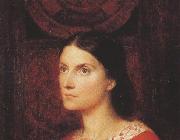
1817-1904
English painter and sculptor. He studied at the Royal Academy and in Italy, where he developed an enthusiasm for Renaissance painting and Greek sculpture that greatly influenced his work. He executed several decorative commissions, including his large fresco Justice (Lincoln's Inn, London), modeled after Raphael's School of Athens. Many of his allegorical pictures are in the Tate Gallery, London. The National Portrait Gallery, London, contains a large collection of his portraits of eminent contemporaries. The Metropolitan Museum has his Ariadne in Naxos. |
|
 |
George Frederick -- Click Here
|
|
British
1817-1904
George Frederick Watts Galleries |
|
 |
george frederic watts,o.m.,r.a. -- Click Here
|
|
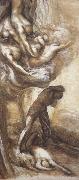
1817-1904 |
|
|
|
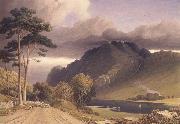 |
George Fennel Robson -- Click Here
|
|
English Painter, 1788-1833
English watercolourist. After initial training in Durham, Robson moved to London in 1804 with the intention of becoming a landscape painter. He was introduced to the circle of artists surrounding John Varley, and it was from Varley that Robson derived the strong, uncluttered compositions and breadth of manner that characterize his own style. |
|
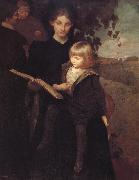 |
George de Forest Brush -- Click Here
|
|
American figure and portrait painter.
b.1855 d.1941
was an American figure and portrait painter. He was born in Shelbyville, Tennessee He was a pupil of G??rome in Paris. He studied in Paris under Jean Leon Gerome, among others. His work was printed in Harpers and Century Magazines as early as 1881, including an illustrated article, An Artist Among the Indians in 1885. He taught at Cooper Union and at The Art Students League and he exhibited and was a member of the National Academy of Design. In 1883, public attention was first attracted to his work by his pictures of Native American life in the West, such as "The Silence Broken," "The Sculptor and the King," "The Indian and the Lily," and "The Moose Chase" (National Gallery, Washington). |
|
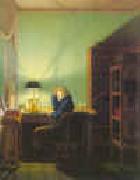 |
Georg Friedrich Kersting -- Click Here
|
|
1785-1847
German
Georg Friedrich Kersting Gallery
Kersting was a friend of Caspar David Friedrich, the leading German Romantic painter; his style was influenced by Friedrich, and he shared that artist's romantic attitude, although in a more subjective manner. The two friends went on a walking tour of the Riesengebirge in 1810. During his many hikes with Friedrich, the two painted numerous sketches and observations from nature. He may have painted the staffage in some of Friedrich's early work??such as Morning in the Riesengebirge (1810?C11), a result of their walking tour.
He was also a friend of the painter Louise Seidler, who described him as "an altogether splendid and comical fellow" and often served as his model. In 1813 Seidler helped Kersting send a number of his works to Johann Wolfgang von Goethe. Goethe was impressed and recommended that the Grand Duke Charles Augustus purchase his work The Embroiderer.
Kersting's most lasting works are his figures in interiors that borrow from seventeenth-century Dutch genre painting. These paintings nevertheless feel contemporary due to the situations depicted and the effect of the artist's personality. The characters are often viewed from the back, as in Friedrich's work, and the scenes provide hints of narrative as the figures engage privately in everyday activities. A number of his works refer to his time in the volunteer corps, the "L??tzow rangers". He drew a full-length self-portrait in 1813, in which he wore the rangers' uniform. The painting On Sentry Duty (1815) depicts three rangers, including the artist Ferdinand Hartmann and the writer Theodor Körner, who fought with Kersting and died in wars against the French. |
|
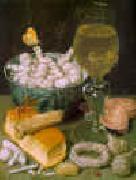 |
Georg Flegel -- Click Here
|
|
1566-1638
Georg Flegel Location
German painter. He was the son of a shoemaker, and not being a Roman Catholic, probably moved to Vienna after 1580, when the Counter-Reformation began to take effect in Olmetz. In Vienna he became the assistant of Lucas van Valckenborch I, whom he subsequently followed to Frankfurt, then an important centre for art dealing and publishing. He filled in staffage in van Valckenborch pictures of the seasons and portraits, inserting fruit, table utensils and flowers as still-life set pieces. His faithful reproduction of flowers and fruit drew on watercolours by Derer, still-life painters from the Netherlands living in Frankfurt, and botanical and zoological illustrations by Joris Hoefnagel, Pieter van der Borcht IV and Carolus Clusius (1525-1609) then being published in Frankfurt. |
|
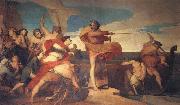 |
Georeg frederic watts,O.M.S,R.A. -- Click Here
|
|
1817-1904 |
|
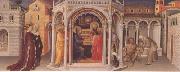 |
Gentile da Fabriano -- Click Here
|
|
Fabriano ca 1370-Rome 1427
Italian painter, one of the outstanding exponents of the elegant international Gothic style. In 1409 he worked in the Doge's Palace, Venice, painting historical frescoes that subsequently perished. In 1422 he was in Florence where he created his most celebrated painting, the resplendent Strozzi altarpiece (Uffizi). Gentile painted in the spirit and the manner of the older school, with glowing color and lavish use of gilt, thereby achieving a jewellike, courtly style. By 1425 he had responded to the new Florentine realism. His refined forms yielded to a sturdier rendering of figures in the Quaratesi altarpiece (panels are now in the Uffizi; Vatican; National Gall., London; and National Gall. of Art, Washington, D.C.). From 1425 until his death he worked in Siena, Orvieto, and Rome. Gentile died in Rome before the completion of the frescoes of St. John the Baptist in the Lateran Basilica. |
|
 |
Gentile da Fabriano -- Click Here
|
|
1370-1427
Italian
Gentile da Fabriano Locations
Gentile da Fabriano, whose real name was Gentile di Niccolo di Giovanni di Massio, came from Fabriano in the Marches. According to tradition, his family was an old one and moderately prosperous. His father, who was said to have been a scholar, mathematician, and astrologer, became an Olivetan monk when a monastery of that order was established in Fabriano in 1397. Gentile brother, Ludovico, was a monk of the same order in Fabriano, and Gentile himself was living in the Olivetan monastery of S. Maria Nuova in Rome at the time of his death. A document of Oct. 14, 1427, speaks of him as dead.
Gentile art indicates that he was probably trained in Lombardy, perhaps in Milan. He worked in the then current International Gothic style, to which he brought his own personal quality. His earliest works display the decorative rhythmic drapery patterns preferred by the International Gothic masters, which Gentile tempered and ultimately abandoned after his contact with Florentine art.
In a document of 1408 Gentile is recorded in Venice, where he painted an altarpiece (now lost) for Francesco Amadi. Testifying to his high reputation was his commission in 1409 for frescoes in the Doges Palace in Venice (painted over in 1479). Pandolfo Malatesta commissioned Gentile to decorate a chapel (destroyed) in Brescia in 1414. The artist is last recorded in Brescia on Sept. 18, 1419, when he departed for Rome to answer the summons of Pope Martin V. Gentile name first appeared on the roll of painters in Florence in 1421. He was in Siena in 1420 and 1424-1425 and in Orvieto late in 1425. From 1426 until the time of his death he was in Rome.
Typical of Gentile early style is the polyptych (ca. 1400) from the convent of Valle Romita in Fabriano, in which Gentile displays the International Gothic love for naturalistic detail in the floral turf beneath the feet of the graceful, slender saints whose figures are swathed in rhythmic, linear drapery. The central panel, the Coronation of the Virgin, shows the love for calligraphic drapery so characteristic of Gentile early style. Other noteworthy early works include the much damaged Madonna in Perugia and the Madonna with Saints and Donor in Berlin.
The altarpiece Adoration of the Magi, signed and dated 1423, was Gentile major work in Florence. In remarkably good condition, with its original frame still intact, it shows Gentile Gothicism now tempered by his contact with the more austere art of Florence. The rich display of gold leaf and brilliant colors were favorite International Gothic traits, but in the interest in perspective and foreshortening and especially in the exquisite predella panels Gentile shows the influence of the Florentines.
The altarpiece for the Quaratesi family, signed and dated 1425, also demonstrates the composite quality of Gentile art. The fresco Madonna Enthroned in Orvieto Cathedral of late 1425 has few traces of the International Gothic style and displays a corporeality and fullness in keeping with his evolution after Florence. His last works, the frescoes in St. John Lateran in Rome depicting the life of John the Baptist and grisaille portraits of saints, were destroyed in 1647, when Francesco Borromini reconstructed the interior. |
|
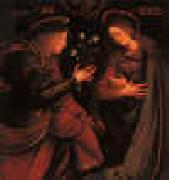 |
Gaudenzio Ferrari -- Click Here
|
|
1741-1546
Italian
Gaudenzio Ferrari Location
Italian painter and sculptor. He probably received his training at Varallo at the beginning of the 1490s, a lively period in the town artistic life, when extensive works were being carried out at the sacromonte. His master was Gian Stefano Scotto ( fl 1508), none of whose works has as yet been identified but who, judging from the early work of his pupil, may have been influenced by Lombard artists. Gaudenzio early works, such as a painting on panel of the Crucifixion (Varallo, Mus. Civ. Pietro Calderini), were influenced by the poetic art of Bramantino and by the northern Italian classicizing style of the Milanese painter Bernardo Zenale. His early, but self-assured, Angel of the Annunciation (c. 1500; Vercelli, Mus. Civ. Borgogna), painted for the Convento delle Grazie, Vercelli, suggests that these sources were soon enriched by his response to the tender Renaissance style of Pietro Perugino (active at the Certosa di Pavia, 1496-9). Gaudenzio is also recorded at Vercelli in the first known documentary reference to him, the contract for a polyptych commissioned by the Confraternit? di Sant Anna in 1508, with Eusebio Ferrari acting as guarantor. There remain four paintings of scenes from the Life of St Anne and God the Father (Turin, Gal. Sabauda) and two of the Annunciation (London, N.G.). In these works Gaudenzio style is more controlled, possibly as a result of a journey to central Italy in c. 1505. |
|
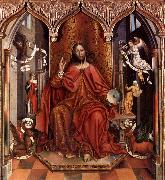 |
Gallego,Fernando -- Click Here
|
|
Fernando Gallego (c. 1440 - 1507) was a Spanish painter, brought up in an age of gothic style, his art is generally regarded as Hispano-Flemish style. It's thought that he was born in Salamanca, Spain, and his first known works were in the cathedrals of Plasencia and Coria, in Ceeres (Spain). His most famous known works are:
The Retablo of San Ildefonso, in the Cathedral of Zamora, Spain
The Sky of Salamanca, in the University of Salamanca, Spain
The Retablo of Ciudad Rodrigo, now at the University of Arizona, Arizona, USA
The Arcenillas' panels, placed in Zamora, Spain
San Acacio and the 10,000 Martyrs, at the Meadows Museum, Dallas, Texas, USA
The last time that he was named in a document is in 1507, but the date of his death is unknown.
|
|
 |
GALLEGO, Fernando -- Click Here
|
|
Spanish Early Renaissance Painter, ca.1440-1507 |
|
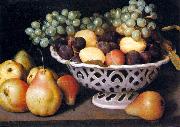 |
Galizia,Fede -- Click Here
|
|
Fede Galizia (1578 - 1630) was an Italian Renaissance painter, a pioneer of the still life genre.
|
|
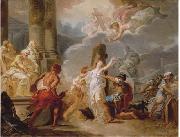 |
Gabriel-Francois Doyen -- Click Here
|
|
(1726 - 5 June 1806) was a French painter, who was born at Paris.
His passion for art prevailed over his father's wish, and he became in his twelfth year a pupil of Charles-Andra van Loo. Making rapid progress, he obtained at twenty the Grand Prix, and in 1748 set out for Rome. He studied the works of Annibale Carracci, Pietro Berrettini da Cortona, Giulio Romano and Michelangelo, then visited Naples, Venice, Bologna and other Italian cities, and in 1755 returned to Paris. At first unappreciated and disparaged, he resolved by one grand effort to achieve a reputation, and in 1758 he exhibited his Death of Virginia. It was completely successful, and procured him admission to the Acad??mie Royale de Peinture et de Sculpture. Among his greatest works are reckoned the Miracle des Ardents, painted for the church of St Genevieve at St Roch (1767)this painting was exhibited in the salon of 1767 which was recorded by Saint-Aubin in "View of the salon of 1767"; the Triumph of Thetis, for the chapel of the Invalides; and the Death of St Louis, for the chapel of the Military School. In 1776 he was appointed professor at the Academy. Soon after the beginning of the French Revolution he accepted the invitation of Catherine II of Russia. and settled at St Petersburg, where he was loaded with honors and rewards. He died there on 5 June 1806.
|
|
|
|
 |
G. Fuchs -- Click Here
|
|
painted Bolle Willum Luxdorph in 1782(1782)
|
|
 |
FYT, Jan -- Click Here
|
|
Flemish Baroque Era Painter, 1611-1661
Flemish painter, draughtsman and etcher. He was apprenticed in Antwerp in 1621-2 to Hans van den Berch [Berghe] (not to be confused with Jan van den Bergh of Alkmaar) and probably completed his training with Frans Snyders. In 1629-30 Fyt became a master in the Antwerp Guild of St Luke, but he continued to work for Snyders until 1631. In 1633 and 1634 he was in Paris. According to his biographers, he then went to Italy; an Italian journey is confirmed by the fact that in 1650 he joined the Antwerp Guild of Romanists (exclusive to those who had visited Rome), of which he became the dean in 1652. He apparently worked in Rome, where he joined the Schildersbent and was given the nickname 'Goudvink' (Dut.: 'goldfinch'). In Venice, according to Orlandi, Fyt worked for the Sagredo and Contarini families. He is also thought to have visited Naples, Florence and Genoa, and Orlandi stated that he also went to Spain and London. By 5 September 1641 Fyt was back in Antwerp, where, apart from a brief trip to the northern Netherlands in 1642, he apparently remained for the rest of his career.
|
|
 |
Fyodor Rokotov -- Click Here
|
|
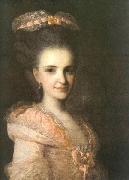
(1736 - 1809) was a distinguished Russian painter who specialized in portraits.
Fyodor Rokotov was born into a family of peasant serfs, belonging to the Repnins. Much in his biography is obscure. He studied art in Saint Petersburg Academy of Arts. After buying back his freedom in the end of 1750s he became established as a fashionable painter.
In 1765, Rokotov was elected an Academician, but he did not work as a professor in the Academy long, because it interfered with his painting. He returned to Moscow in 1765, where he lived for the rest of his life. He had a lot of commissions there, becoming one of the best portrait painters of his time.
Among his best-known portraits are Portrait of Alexandra Struyskaya (1772), sometimes called the Russian Mona Lisa and admittedly the most celebrated piece of the 18th-century Russian painting; Portrait of Countess Elisabeth Santi (1785), and Lady in a Pink Dress. |
|
 |
FURINI, Francesco -- Click Here
|
|
Italian Baroque Era Painter, 1603-1646
Italian painter. He was one of the leading Florentine painters of the first half of the 17th century, famous for the ambiguous sensuality and sfumato effects of his many paintings of female nudes. He first studied with his father, Filippo Furini, nicknamed Pippo Sciamerone and described by Baldinucci as a portrait painter, and he completed his apprenticeship in the studios of Domenico Passignano and of Giovanni Bilivert. Inspired by an admiration for Classical sculpture, which he studied in the Medici collection in Florence, and for Raphael, he travelled to Rome, which he reached as early as 1619 (Gantelli, see 1972 exh. cat.). Here he came into contact with Bartolomeo Manfredi and with Giovanni da San Giovanni. In 1623 he assisted the latter on the frescoes of the Chariot of the Night in the Palazzo Bentivoglio (now Pallavicini-Rospigliosi), commissioned by Cardinal Guido Bentivoglio, and also perhaps on the lower paintings (1623-4) in the apse of the church of SS Quattro Coronati, Rome. |
|
|
|
 |
FRUEAUF, Rueland the Younger -- Click Here
|
|
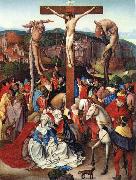
Austrian painter (b. ca. 1470, Passau, d. ca.
1545, Passau). |
|
 |
FRUEAUF, Rueland the Elder -- Click Here
|
|
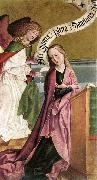
Austrian painter (b. 1440/45, Passau, d. 1507, Passau).
|
|
 |
FROMENT, Nicolas -- Click Here
|
|
French Early Renaissance Painter, ca.1430-1485 |
|
 |
Fritz Zuber-Buhler -- Click Here
|
|
was a Swiss painter integrant of the style Academic Classicism, born in 1822 at Le Locle in Switzerland and died November 23, 1896.
At sixteen years old he moved to Paris, France where found his first teacher Louis Grosclaude. Later he studied at the École des Beaux-Arts and then refined his technical skills with François-Édouard Picot, who followed the same lineage of contemporaneous artists such as Leon Perrault, Bouguereau, Alexandre Cabanel and many others. Afterwards he spent some time in Italy searching for inspiration and raise the quality of his art. Then, returning to Paris, he made his debut at the Salon in 1850 exhibiting alongside oil paintings, drawings, pastels and watercolors.
His painting Innocence shows his romantic view of the peasant childhood and their environments, expressing nature, softness and intense details. Also his works were drawn by popular themes at that period like mythology, religion and requested portraits. Zuber-Buhler produced exhibitions in the United States, comprising at the Pennsylvania Academy of the Fine Arts and achieved great admiration as a classic academic painter. |
|
 |
Fritz von Uhde -- Click Here
|
|
German, 1848-1911
was a German painter of genre and religious subjects. His style lay between Realism and .Uhde was born in Wolkenburg, Saxony. In 1866 he was admitted to the Academy of Fine Arts in Dresden, but later that year he left his studies for military service, and from 1867 to 1877 he was a professor of horsemanship to the regiment of the assembled guard. He moved to Munich in 1877 to attend the Academy of Fine Arts. In Munich he particularly admired the Dutch old masters, and in 1879 he travelled to Paris where his studies of the Dutch painters continued under Mihely Munkecsy's supervision. In 1882 a journey to Holland brought about a change in his style, as he abandoned the dark chiaroscuro he had learned in Munich in favor of a colorism informed by the works of the French Impressionists. His work was often rejected by the official art criticism, and by the public, because his representations of ordinary scenes were considered vulagar or ugly. The critic Otto Julius Bierbaum was more sympathetic; in 1893, he wrote, "As a painter of children, for example, Uhde is extraordinarily distinguished. He does not depict them as sweetly as used to be popular; in other words not as amusing or charming dolls, but with extreme, very strict naturalness." In about 1890, Uhde became a professor at the Academy of Fine Arts in Munich. |
|
 |
fritz von dardel -- Click Here
|
|
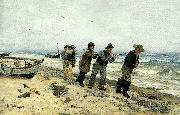
Fritz Ludvig von Dardel, född den 24 mars 1817 i Neuchâtel, död den 27 maj 1901 i Stockholm, var en schweiziskfödd svensk överintendent, militär, målare och tecknare.
Fritz von Dardel var son till godsägaren Georges-Alexandre von Dardel och grevinnan Hedvig Sofia Charlotta Amalia Lewenhaupt. Han var gift med friherrinnan Augusta Silfverschiöld. Släkten von Dardel kommer från Schweiz och adlades i Sverige 1810.
Von Dardel blev vid sexton års ålder konstapelkadett vid Vendes artilleriregemente, 1837 underlöjtnant vid Svea livgarde och avancerade till överstelöjtnant i armen 1862. Han blev 1850 adjutant hos kronprinsen och sedan hos Karl XV. Von Dardel var 1858-62 militärattach?? i Paris samt blev 1864 kabinettskammarherre hos Karl XV och samma år överintendent och ordföranden i Akademin för de fria konsterna, av vilken han 1861 invalts till hedersledamot. Dessutom var han ordförande i Nationalmuseums nämnd i 25 år (1867-92).
Vid flera konstutställningar i Europa (1867, 1871, 1873 och 1878) samt i Philadelphia (1876) var han juryman.
Själv hade von Dardel bedrivit studier på L??on Cogniets och E. Lamis ateljeer i Paris.
Fritz von Dardel tillhörde Karl XV:s intima krets och har gjort ett flertal dråpliga, akvarellerade teckningar av personer och händelser vid hovet eller under kungens resor, vidare folklivsbilder samt litografier. Hans dagböcker (se nedan) som utgavs postumt är skrivna på franska och översatta och redigerade av hans söner. |
|
 |
fritz thaulow -- Click Here
|
|
född 1847 i Christiania, död 5 november 1906, var en norsk målare. Han är en av de internationellt mest kända norska konstnärerna från 1800-talet.
Thaulow fick sin utbildning vid Konstakademin i Köpenhamn 1870 -72, och 1873-75 var han elev till Hans Gude i Karlsruhe. Åren efter detta uppehöll han sig för det mesta i Paris där han fick avgörande intryck från de franska impressionisterna.
1880 vände Thaulow hem som överbevisad naturalist. Tillsammans med Christian Krohg och Erik Werenskiold blev han snabbt en av ledarna i de unge konstnärernas kamp för en rikare och mer vidsynt norsk konstmiljö. Thaulow var bl.a. med på att etablera den första Höstutställningen 1882.
1892 slog han sig ner i Frankrike, och han besökte USA 1898. Från och med samma år bosatte han sig i Paris, där han blev en kändis och blev också känd internationellt, bl.a. genom att bli antagen till den prestigefulla Salongen. |
|
 |
Fritz Petzholdt -- Click Here
|
|
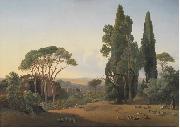
(1 January 1805 - 29 August 1838) was a Danish landscape painter of the Copenhagen School, also known as the Golden Age of Danish Painting. He spent most of his artistic life in Italy, where he painted refined landscapes in a light colour palette but died early, most likely by way of suicide.
Fritz Petzholdt was born into a prosperous home on 1 January 1805 in Copenhagen to grocer Johan Jacob Petzholdt and his second wife Josephine Marie Elisabeth Petzholdt. After completing an apprenticeship as a house painter, he attended the Royal Danish Academy of Fine Arts from 1824 where he studied under Christoffer Wilhelm Eckersberg, known as the farther of the Golden Age of Danish Painting spanning the first half of the 19th century. He graduated in 1828 and already the following year sold a painting, En mose ved Høsterkøb med tørvearbejdere (A Bog at Høsterkøb), to the Royal Danish Painting Collection.
Although he never won the Academy's gold medal, the traditional opening for Academy students to go abroad to further their studies since it was accompanied by a travel stipend, his family's wealth allowed him to travel to Harz the same year and then, in May 1830, to set out for Rome. On the way he visited Dresden, Prague, Nuremberg, Munich, Venice and Florence. In Rome he joined the Danish artists colony which had formed in the city with Bertel Thorvaldsen as its centre. He made excursions to the Roman countrysideeto places such as Tivoli, Subiaco and Olevanoeas well as longer trips south to Naples, Sicily and Corfu.
In the winter of 1835/36 he returned to Copenhagen due to his farther's illness and subsequent death. Shortly after the funeral, he returned to Italy with an extended stop in Munich on the way. From Italy he continued to Greece, a destination only Martinus Rørbye had visited before him among the Danish Golden Age painters. On 29 August 1838 he was found dead in his hotel room in Patras with his throat cut. Whether it was a case of suicide or murder was never settled.
|
|
 |
Fritz Beinke -- Click Here
|
|
(1842- 1907 ) - Painter
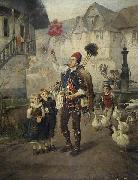
painted The toymaker of Nuremberg in 1882 |
|
 |
Frits Van den Berghe -- Click Here
|
|
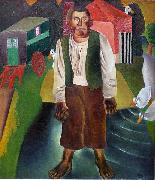
(3 April 1883 - 22 September 1939) was a Belgian expressionist painter.
He was born at Ghent. Like his friends Constant Permeke and Gustave De Smet, he first adopted the late-impressionist style of Emile Claus, but converted to expressionism during World War I.
|
|
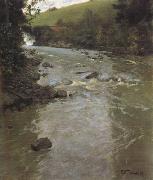 |
Frits Thaulow -- Click Here
|
|
Norwegian Impressionist Painter, 1847-1906
.Norwegian painter and engraver. Originally wanting to become a marine painter he studied at the art academy in Copenhagen (1870-73) as well as with the Danish marine specialist C. F. S?rensen (1818-79). He spent two winters at Karlsruhe (1873-4, 1874-5) as the pupil of Hans Gude and then went to Paris, where he spent much of the period 1875-9. His marines and coastal pictures, some of which were accepted at the Paris Salon, were only moderately successful, but he acquired a fair knowledge of contemporary French Realist art and felt that Norwegian artists should learn from it. |
|
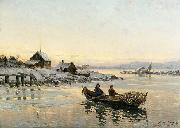 |
Frithjof Smith Hald -- Click Here
|
|
1846-1903, Norway
paint Til lands med fangsten in 1892 |
|
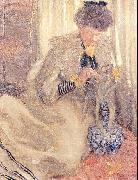 |
Frieseke, Frederick Carl -- Click Here
|
|
American Impressionist Painter, 1874-1939
was an American Impressionist painter. He was born in Owosso, Michigan and studied at the School of the Art Institute of Chicago and the Academie Julian in Paris. Frieseke and his family resided for fourteen years in Giverny, which was also home to Monet. He had a great influence on the Americans at the colony there |
|
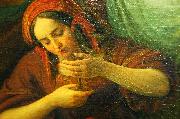 |
Friedrich Wilhelm Schadow -- Click Here
|
|
Friedrich Wilhelm Schadow (7 September 1789 - 19 March 1862) was a German Romantic painter.
He was born in Berlin and was the second son of the sculptor Johann Gottfried Schadow.
In 1806-1807 Friedrich served as a soldier. In 1810 he traveled with his elder brother Rudolph to Rome where he became one of the leaders among painters of the Nazarene movement. Following the example of Johann Friedrich Overbeck and others, he joined the Roman Catholic Church, and held that an artist must believe and live out the truths he essays to paint. The sequel showed that Schadow was qualified to shine more as a teacher and mentor than as a painter. As an author, he is best known for his lecture, Ueber den Einfluss des Christentums auf die bildende Kunst (About The Influence of Christianity On The Visual Arts) (Desseldorf, 1843), and the biographical sketches, Der moderne Vasari (Berlin, 1854).
In Rome, Schadow was given one of his first major commissions when the Prussian Consul-General, General Jakob Salomon Bartholdy, befriended the young painter, and asked him and three young compatriots (Cornelius, Overbeck and Veit) to decorate in fresco a room in his house on the Pincian Hill. The overall theme selected was the story of Joseph and his brethren, and two scenes, the Bloody Coat and Joseph in Prison, were conferred on Schadow. In 1819, Schadow was appointed professor in the prestigious Berlin Academy of the Arts, and his ability and thorough training gained many devoted disciples.
It was during this period that Schadow developed his paintings for churches. In 1826, Professor Schadow was made director of the Desseldorf Academy of the Arts, which he reoriented towards the production of Christian art, though he began a major dispute with one of its professors, Heinrich Christoph Kolbe, ending in the latter leaving the Academy in 1832. In 1837, Schadow selected, at request, those of his students best qualified to decorate the chapel of St Apollinaris on the Rhine with frescoes. When finished, they were acclaimed as the fullest and purest manifestation of the spiritual side of the Desseldorf school. One of his famous students, Heinrich Mucke, carried on the liturgical art with emphasis both in painting and frescoes. The painting of the "Wise and Foolish Virgins," considered one of his masterworks, was commissioned in 1842. Now in the Städel Museum, this large and important picture, while carefully considered and rendered, it however lacks power of some of his other works. |
|
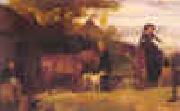 |
Friedrich Wilhelm Keyl -- Click Here
|
|
German (Resident in UK)
1823-1871
|
|
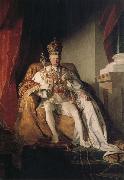 |
Friedrich von Amerling -- Click Here
|
|
Austrian Academic Painter, 1803-1887,Austrian painter. He came from a family of craftsmen and studied (1815-24) at the Akademie der bildenden Kenste, Vienna, where one of his teachers was the conservative history painter Hubert Maurer (1738-1818). From 1824 to 1826 he attended the Academy in Prague, where he was taught by Josef Bergler. In 1827 and 1828 Amerling stayed in London, and he met the portrait painter Sir Thomas Lawrence, whose work was to be a strong influence on Amerling's painting during the next two decades. Amerling also travelled to Paris and Rome but was recalled to Vienna on an official commission to paint a life-size portrait of the emperor Francis I of Austria (Vienna, Ksthist. Mus.). With this work, |
|
|
|
|
|
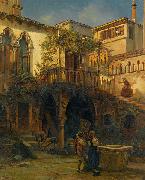 |
Friedrich Paul Nerly -- Click Here
|
|
(Venedig 1842-Luzern 1919 ) - Painter |
|
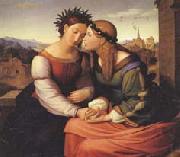 |
Friedrich overbeck -- Click Here
|
|
1789-1869
German religious painter. Expelled from the Vienna Academy because of his opposition to its classicism, he went to Rome and with Peter von Cornelius, Veit, Schadow-Godenhaus, and others, formed the group known as the Nazarenes. His first real successes were his frescoes for the Casa Bartholdy (now in Berlin) and for the Villa Massimo. Among his notable paintings are Christ's Entry into Jerusalem and Christ's Agony in the Garden. Overbeck sought to make his art serve religion. |
|
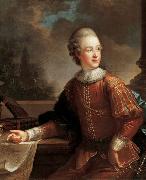 |
Friedrich olenhainz -- Click Here
|
|
(June 28, 1745 - November 5, 1804) was a German painter. |
|
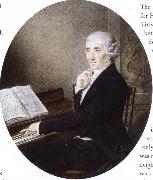 |
friedrich nietzsche -- Click Here
|
|
Period: Romantic (1820-1869)
Country: Germany
Born: October 15, 1844 in Röcken
Died: August 25, 1900 in Weimar |
|
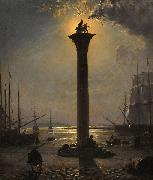 |
Friedrich Nerly -- Click Here
|
|
painted Piazetta San Marco im Mondschein in 19th century
|
|
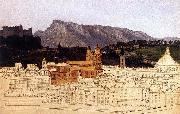 |
Friedrich Loos -- Click Here
|
|
was an Austrian Biedermeier style painter, etcher and lithographer. He was born in Graz on 29 October 1797. He studied at the Vienna Academy with Joseph Mössmer and also went on study tours through the Austrian Alpine regions. From 1835 to 1836 he lived in Vienna, and as of 1846 he sojourned in Rome. He then moved to Kiel, where he worked as a drawing teacher at the university as of 1863 and where he also died on 9 May 1890. In his pictures he emphasized light and color in order to loosen up his painting, as well as to harmonize and unite the details.
|
|
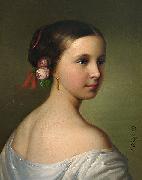 |
Friedrich Krepp -- Click Here
|
|
Friedrich Krepp (fl. Wien 1852-1862)
|
|
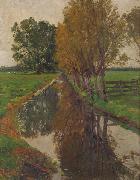 |
Friedrich Kallmorgen -- Click Here
|
|
painted Friedrich Kallmorgen Weiden am Bach in 1896 |
|
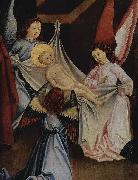 |
Friedrich Herlin -- Click Here
|
|
(c. 1425/30 - 1500) was a German painter. His earliest known work, depicting scenes from the Life of the Virgin, is dated 1459. A signature on an altarpiece in Nördlingen, dating it to 1462, identifies him as being from Rothenburg, as do citizenship documents from 1467. Nevertheless, it is possible that he lived there for only a short time, and that his origins lie in Ulm, where a painter named Hans Herlin lived and worked from 1449 until 1468. Stylistically, he borrowed much from Rogier van der Weyden, indicating a great deal of familiarity with the art of the Netherlands and of Cologne. The sculpture attached to the altarpiece of 1462, though officially listed as by the so-called "Master of Nördlingen", has been tentatively ascribed to Nicolaus Gerhaert, which if true would indicate extensive contacts to the highest artistic circles of the era.
Little else is known of Herlin, save that he died in Nördlingen in 1500.
|
|
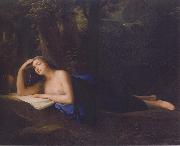 |
Friedrich Heinrich Fuger -- Click Here
|
|
German Neoclassical Painter, 1751-1818 |
|
 |
Friedrich Hagedorn -- Click Here
|
|
(23 April 1708 - 28 October 1754), German poet, was born at Hamburg, where his father, a man of scientific and literary taste, was Danish minister.
He was educated at the gymnasium of Hamburg, and later (1726) became a student of law at Jena. Returning to Hamburg in 1729, he obtained the appointment of unpaid private secretary to the Danish ambassador in London, where he lived till 1731. Hagedorn's return to Hamburg was followed by a period of great poverty and hardship, but in 1733 he was appointed secretary to the so-called "English Court" (Englischer Hof) in Hamburg, a trading company founded in the 13th century. He shortly afterwards married, and from this time had sufficient leisure to pursue his literary occupations till his death.
Hagedorn is the first German poet who bears unmistakable testimony to the nation's recovery from the devastation wrought by the Thirty Years' War. He is eminently a social poet. His light and graceful love-songs and anacreontics, with their undisguised joie de vivre, introduced a new note into the German lyric; his fables and tales in verse are hardly inferior in form and in delicate persiflage to those of his master La Fontaine, and his moralizing poetry re-echoes the philosophy of Horace. He exerted a dominant influence on the German lyric until late in the 18th century.
The first collection of Hagedorn's poems was published at Hamburg shortly after his return from Jena in 1729, under the title Versuch einiger Gedichte (reprinted by A. Sauer, Heilbronn, 1883). In 1738 appeared Versuch in poetischen Fabeln und Erzählungen; in 1742 a collection of his lyric poems, under the title Sammlung neuer Oden und Lieder; and his Moralische Gedichte in 1750. A collection of his entire works was published at Hamburg in 1757 after his death. The best is J.J. Eschenburg's edition (5 vols., Hamburg, 1800). Selections of his poetry with an excellent introduction in F. Muncker's Anakreontiker und preussisch-patriotische Lyriker (Stuttgart, 1894). See also H. Schuster, F. von Hagedorn und seine Bedeutung fer die deutsche Literatur (Leipzig, 1882); W. Eigenbrodt, Hagedorn und die Erzählung in Reimversen (Berlin, 1884).
|
|
 |
Friedrich Georg Weitsch -- Click Here
|
|
1758 Braunschweig-1828 Berlin |
|
 |
Friedrich Gauermann -- Click Here
|
|
(September 10, 1807 - July 7, 1862), Austrian painter, son of the landscape painter Jacob Gauermann (1773 - 1843), was born at Miesenbach near Gutenstein in Lower Austria.
It was the intention of his father that he should devote himself to agriculture, but the example of an elder brother, who, however, died early, fostered his inclination towards art. Under his father's direction he began studies in landscape, and he also diligently copied the works of the chief masters in animal painting which were contained in the academy and court library of Vienna. In the summer he made art tours in the districts of Styria, Tirol, and Salzburg.
Two animal pieces which he exhibited at the Vienna Exhibition of 1824 were regarded as remarkable productions for his years, and led to his receiving commissions in 1825 and 1826 from Prince Metternich and Caraman, the French ambassador. His reputation was greatly increased by his picture "The Storm," exhibited in 1829, and from that time his works were much sought after and obtained correspondingly high prices. His "Field Labourer" was regarded by many as the most noteworthy picture in the Vienna exhibition of 1834, and his numerous animal pieces have entitled him to a place in the first rank of painters of that class of subjects.
The peculiarity of his pictures is the representation of human and animal figures in connexion with appropriate landscapes and in characteristic situations so as to manifest nature as a living whole, and he particularly excels in depicting the free life of animals in wild mountain scenery. Along with great mastery of the technicalities of his art, his works exhibit patient and keen observation, free and correct handling of details, and bold and clear colouring. He died at Vienna on the 7th of July 1862.
Many of his pictures have been engraved, and after his death a selection of fifty-three of his works was prepared for this purpose by the Austrian Kunstverein (Art Union).
|
|
 |
Friedrich Eduard Meyerheim -- Click Here
|
|
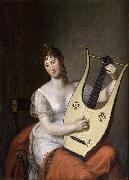
painted Die Kegelgesellschaft in 1834 |
|
 |
Friedrich Carl Groger -- Click Here
|
|
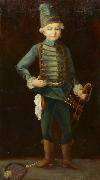
(14 October 1766, Plön - 9 November 1838, Hamburg) was a north-German portrait painter and lithographer. One of the most respected portraitists of his time in northern Germany, his works are to be found in several museums, including the Hamburger Kunsthalle, as well as in north German, Holstein and Danish private collections.
Gröger was the son of a tailor in Plön, where he grew up in modest circumstances. His parents wanted him to become a tailor or wood turner and opposed his early artistic activities. He was largely self taught in painting, though he had some contact in Lebeck with Tischbein and in 1785 was in the city of Lebeck, where he met Heinrich Jacob Aldenrath, his first, loyalest and lifelong friend - the Grögersweg in Hamburg-Barmbek named after him links the Tischbeinstraße with the Aldenrathsweg.
From 1789 he studied at Berlin's Akademie der Kenste. He and Aldenrath then went together to Hamburg, then on a joint study trip to Dresden and Paris, then back to Lebeck, where he worked until 1807. They then alternated between Hamburg, Copenhagen, Kiel and Lebeck, before finally settling in Hamburg in 1814. In 1792 Gröger was made an honorary member of the Gesellschaft zur Beförderung gemeinnetziger Tätigkeit in Lebeck.
Gröger developed from a miniature painter into a portrait painter, who towards the end of his life preferred three quarter bust portraits. Aldenrath took over the miniature painting side of their joint business. After lithography developed in northern Germany, they both worked in this medium individually as well as jointly under the business name Firma Gröger & Aldenrath.
|
|
 |
Friedrich August von Kaulbach -- Click Here
|
|
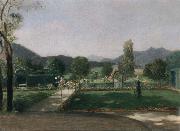
(2 June 1850, Hannover - 26 July 1920, Munich, Germany) was a German portraitist and historical painter. He was the son of Theodor Friedrich Wilhelm Christian Kaulbach (1822 - 1903), the court painter at Hannover, and the great nephew of Wilhelm Kaulbach, another prominent member of the Kaulbach family of artists. He learned to paint from his father, and later was a student of August von Kreling at Nuremberg. He sought to emulate the artist Hans Holbein. |
|
 |
Friedrich August von Kaulabch -- Click Here
|
|
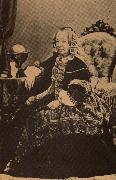
Munich 1850-1920 Ohlstadt
|
|
|
|
 |
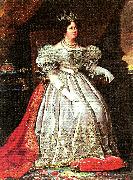
fredrika bremer -- Click Here
|
|
was a Swedish writer and a feminist activist.
Fredrika Bremer was born in Åbo (Turku) in Finland but moved with her family to Stockholm when she was three years old. She grew up in Stockholm and in the manor Årsta outside Stockholm. Her father was described as somewhat of a house tyrant, and her mother was a socialite, and she and her sisters where brought up to marry in to the aristocracy; a trip on the continent 1821-1822 was the finishing touch of her upbringing before her debute.
Bremer was not comfortable with this role, and was inflicted by a crisis, which she overcame by charitable work in the country around Årsta. In 1828, she debuted as a writer, anonomously, with a series of novels published until 1831, and was soon followed by others. Her novels were romantic stories of the time and concentrates on women in the marriage market; either beautiful and superficial, or unattractive with no hope of joining it, and the person telling the story and watching them is often an independent woman. She wanted a new kind of family life, not focused only on the men of the family, that would allow for women to develop their own talents and personality. By the 1840s, she was an acknowledged part of the culture life in Sweden and was translated to many languages. Politically, she was a liberal, but also felt symphaty for the socialism of the English working class movement |
|
 |
fredrik westin -- Click Here
|
|
Fredric Westin, född den 22 september 1782 i Stockholm, död 13 maj 1862 i Stockholm, historie- och porträttmålare.
Westin hade varit elev hos Lorens Pasch d.y. och Louis Masreliez på Konstakademien. Sedan han 1808 blivit kallad till akademiens agr?? och förordnad till konduktör vid kungliga museet blev han 1812 invald i Konstakademiens styrelse. Han blev 1815 vice professor och 1816 professor vid Konstakademien. Där var han också 1828-1840 direktör. 1843 utnämndes han till hovintendent.
Till hans tidigare skede och till hans främsta alster hör "Dagens stunder", fyra dörrstycken i Karl Johans sängkammare på Rosersbergs slott med antikiserande figurer: Aurora som strör blommor över jorden, Apollon med sitt fyrspann, Diana följd av Aftonrodnaden samt Natten med sitt stjärnströdda dok (1812-13). På Säfstaholms slott finns "De fyra årstiderna presiderade av jordens gudinna" (1843), på Rosendals slott "Hebe med örnen" (1832) och "Flora bekransande Linn??s byst" (1843) och vid Stockholms universitet "Musiken, föreställd av en grupp unga flickor". Han målade också kompositioner ur den svenska historien ("Olof Skötkonungs dop", "Lutherska lärans antagande").
Westin målade en stor mängd porträtt då han under Karl XIV Johans tid var konstnären på modet. Som porträttmålare var han dock inte enhälligt uppskattad. En kritiker som Silverstolpe beklagade 1809 att en konstnär som "äger så mycken färdighet till stöd för sitt sökande av idealet" sysselsatte sig med en konst av så lågt värde och hoppades att han "måtte återvända från den platta verkliga världen till den poetiska." Hammarsköld menade 1818 att av de svenska konstnärerna var det Westin som hade de ringaste anlagen för porträttmålning. Scholander kallade hans porträtt för "vaxgubbar". Andra hade lovord att fälla över Westins porträtt. Gerss ansåg att Westins porträtt hade likhet och behag i uttrycket, enkelhet i ställning och klädsel, urval av natur i formerna och säkerhet och sanning i utförandet. Wennberg kallade honom "den förste svenske tecknarens Lorenz Paschs så värdige fosterson".
Under Karl XIV Johans tid målade han rad porträtt på kungafamiljen. 1824 målade han en populär allegori över kronprinsessan Josefinas ankomst till Sverige, där Saga i gul och blå dräkt sitter på marken framför en runsten och blickar upp mot skyn där kronprinsessan i röd och vit dräkt svävar ned på en molntapp omgiven av tre amoriner. 1838 målade han Karl XIV Johan till häst på Ladugårdsgärdet hälsande med den trekantiga hatten.
Efter att Sandbergs altartavla för Sankt Jacobs kyrka hade underkänts vände sig de ansvariga till Westin med uppdraget att måla en altartavla. Målningen, "Kristi förklaring" var klar 1828 och resultatet blev både hyllat och kritiserat. Andra altartavlor av Westin finns i Kungsholms kyrka ("Kristi uppståndelse", 1825), Åbo domkyrka ("Kristi förklaring", 1836), Uddevalla kyrka ("Kristus välsignar barnen") samt Carl Gustafs kyrka ("Kristi begravning", 1832). |
|
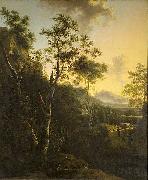 |
Frederik de Moucheron -- Click Here
|
|
(1633-2 January 1686) was a Dutch Golden Age landscape painter.
Frederik de Moucheron was the son of the painter Balthazar de Moucheron and Cornelia van Brouckhoven. His father came from a wealthy family of wine traders and is portrayed as one of the younger sons in the Moucheron Family portrait, 1563. Frederik trained with Jan Asselijn and became a landscape painter. He set off at age 22 for Paris, where he spent 3 years and then after a tour of Antwerp, Paris. and Lyon, he settled in 1659 in Amsterdam. In the same year he married Mariecke de Jouderville there and they had 11 children. He is buried in Amsterdam.
He painted French, Italian, and Dutch landscapes. To finish these scenes, contemporaries specialized in painting figures collaborated with him, such as Adriaen van de Velde in Amsterdam, Theodor Helmbreker in Paris, and at times Johannes Lingelbach, and Nicolaes Pieterszoon Berchem.
|
|
 |
Frederico Bartolini -- Click Here
|
|
British,
1854-1941 |
|
|
|
|
| | |
|
|
|
|